
Guoxin Optoelectronics Closes Out Guangzhou Cultural Industry Fair, Bringing LED Holographic Light to Culture, Retail, Tourism and Sports Scenarios
Guangzhou, November 24, 2026 — From November 20 to 22, the 2026 Guangzhou Cultural Industry Fair (GZ CIF) ran at Halls 17.1–20.1, Area D, Canton Fair Complex. Hosted by the Guangzhou Municipal People's Government and spanning over 40,000 square meters, the fair brought together more than 500 exhibitors across three co-located shows: the Culture, Retail, Tourism and Sports Digital Equipment Exhibition, the International Cultural Tourism Trade Exhibition, and the Guangzhou Film Industry Expo. Guoxin Optoelectronics presented its LED holographic transparent screens, naked-eye 3D folded screens and flexible film screens in the sound-and-light exhibition zone, receiving a steady stream of visitors from scenic areas, shopping complexes, museums and stage engineering companies throughout the three-day run.
A screen you can see through became the booth's visual anchor
The centerpiece was an L-shaped, folded installation of naked-eye 3D transparent LED screens. With the display off, visitors could see straight through the panel to the exhibits behind it; once powered on, the subject of the animation appeared to step out along the fold line, creating a floating three-dimensional effect without any wearable device.
The response on opening day was immediate. Many visitors reached out to touch the panel, checking whether the image really existed on the glass surface. Cultural tourism project teams asked repeatedly about transparency rate and optimal viewing distance, while shopping mall operators arrived with floor plans of their atriums, ready to discuss layout.
Alongside it, a flexible film screen demonstrated a different approach: a panel that conforms to curved glass and irregular structures, well suited to light retrofits of existing buildings. A cylindrical column wrap on site showed how the film adapts to curved surfaces in practice.
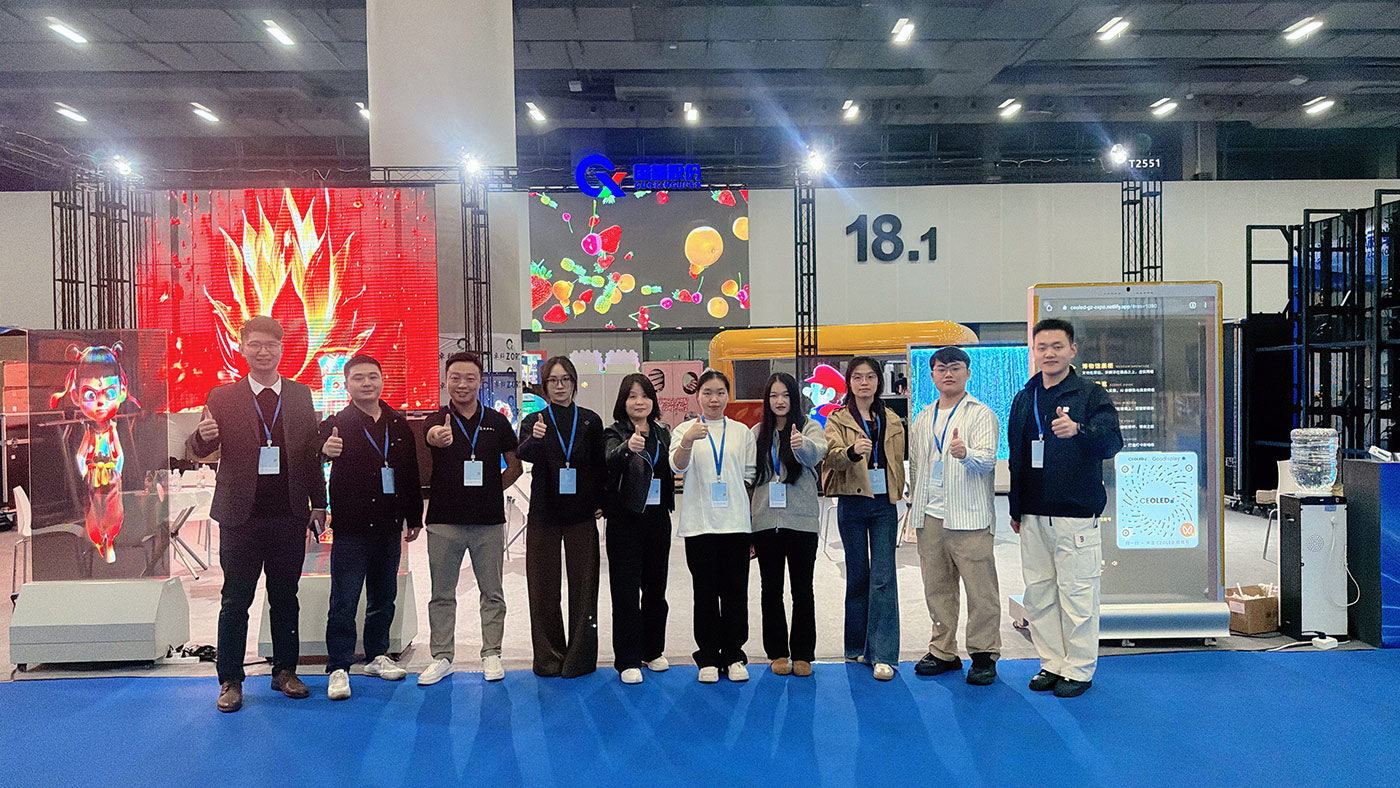
The conversation shifted from hardware to scenarios
Compared with previous editions, the most frequent questions were no longer about price per square meter, but about feasibility: "Can this work on my site?" "Where does the audience come from?" "Will it be visible in daylight?"
Those questions map directly onto real demand. Scenic night tours need dwell time and shareability. Shopping complexes need a differentiated visual anchor. Museums need digital content layered onto physical exhibits. Stage productions need temporary rigs that assemble and strike quickly. Each requires a different combination of pixel pitch, fold angle and content production — a single generic quotation cannot cover all four.
During the fair, the Guoxin team held project-level discussions with cultural tourism groups, retail operators and stage design companies. Several sites have moved into on-site measurement and viewing-angle simulation.
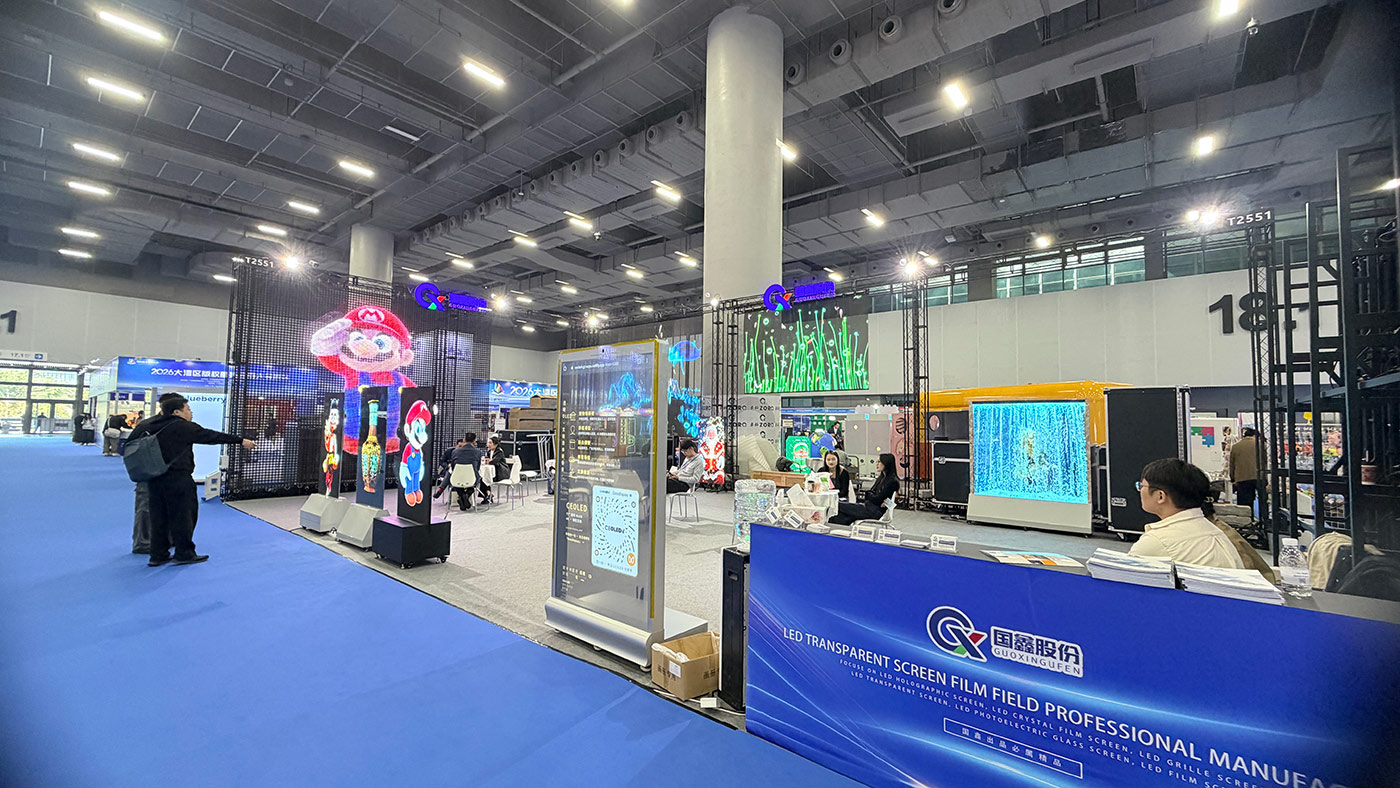
Capability comes from the production line, not from a script
Transparent holographic screens look simple — thin, light, almost invisible — but the real difficulty lies in consistency and reliability. The LED strips are narrow and densely packed: placement accuracy determines the solder-joint failure rate, and thermal design determines dead-pixel rates over time.
Guoxin Optoelectronics operates its own SMT placement line and LED strip aging facility. Every screen undergoes 48 to 72 hours of full-power aging plus pixel-by-pixel calibration before shipment — the foundation of even brightness and stable operation three years out.
On the control side, the products are compatible with mainstream systems including Colorlight and Nova, allowing direct integration into existing control platforms rather than on-site troubleshooting.
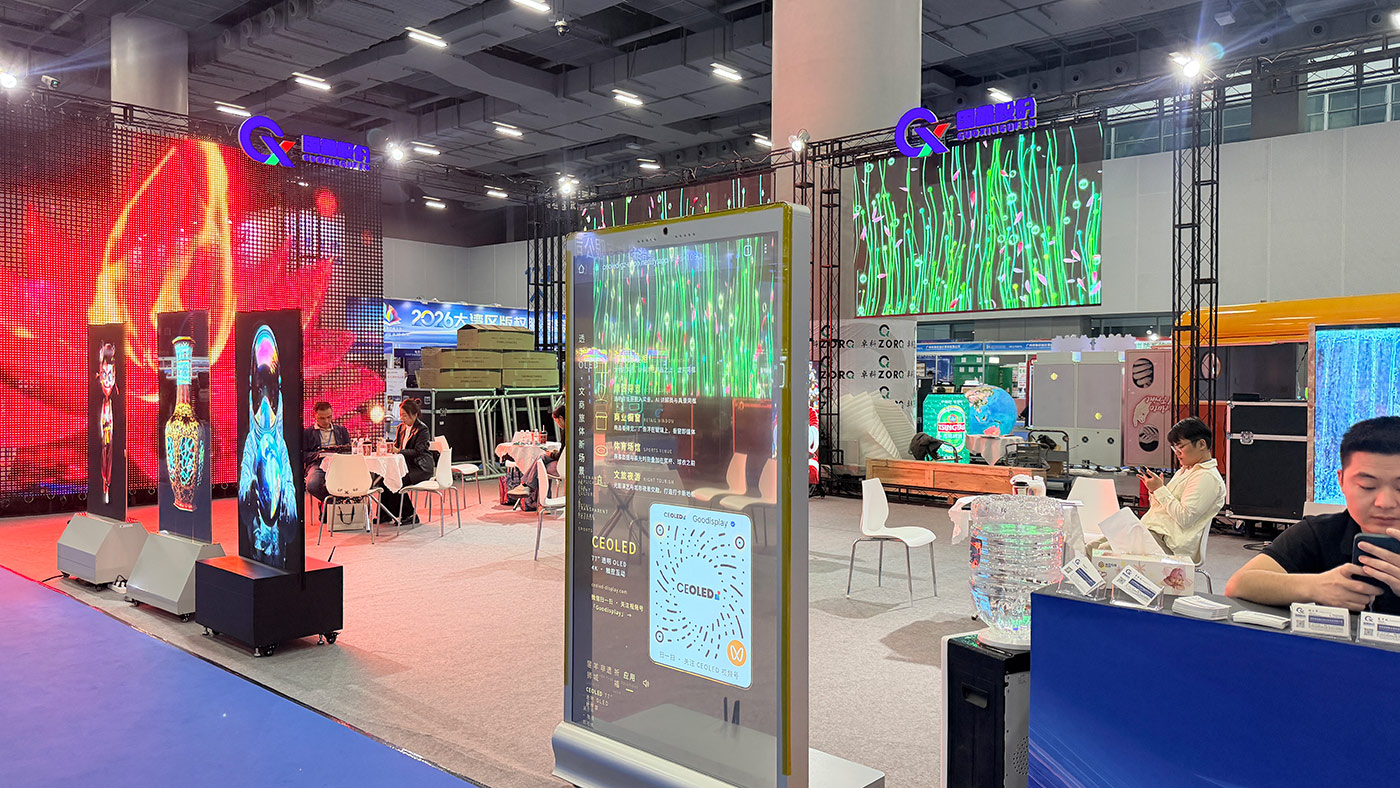
The fair is over; the installations are just beginning
Now in its ninth edition, GZ CIF is one of only two exhibitions the Guangzhou municipal government retains under its own name, and its "culture plus technology" positioning aligns closely with where LED holographic displays actually get deployed.
For Guoxin, the three days yielded more than a stack of business cards: a set of real sites, each with its own dimensions and pedestrian flow. Over the coming month, the team will work through those projects in priority order — site measurement, fold layout, viewing-angle simulation — turning "it looked great at the booth" into something that can be verified on paper.
Digital upgrades in culture, retail, tourism and sports will not stop at the exhibition hall. A screen can light up a space, but what decides whether a project succeeds is how carefully those drawings are made at the proposal stage.
For layout drawings, viewing-angle simulations or packaged quotations for LED holographic transparent screens, naked-eye 3D folded screens and flexible film screens, please contact Guoxin Optoelectronics.


